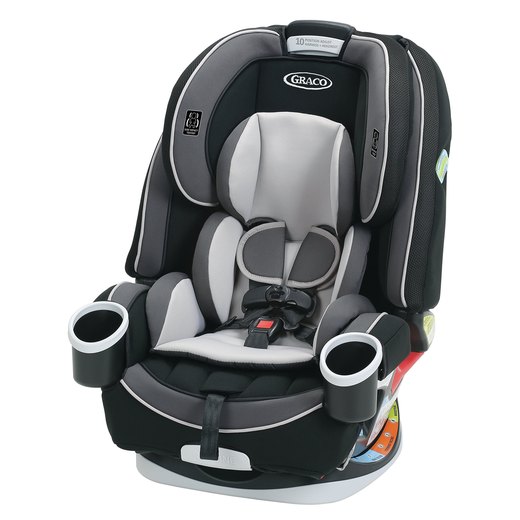
Eight convertible and all-in-one seats that cover rear-facing, forward-facing and, in most cases, booster years. Every seat here was checked against CPSC and NHTSA recall records before it made the list.
Last updated: October 2026
We may earn a commission if you buy through our Amazon links. It does not change what you pay or how the seats are ranked.
How we chose these seats
This is a research-only guide. Little Ones Lab has not crash-tested or hands-on tested any seat in this list. The shortlist is built from manufacturer specifications, NHTSA data, and published expert reviews, mainly Wirecutter, BabyGearLab, and Car Seats for the Littles. Rankings weigh rear-facing limits, installed width, installation features, and published crash-test analysis.
Recall checks, run on every seat. On October 25, 2026, every seat in this guide was checked by model name against the CPSC recall database and NHTSA's child seat recall records. No seat listed here is covered by a recall affecting models currently in production. Two well-known seats were left out: the Cybex Sirona S, which Cybex no longer sells new in the United States, and the Nuna RAVA, which is sold through specialty retailers and has no Amazon listing to link.
The quick list
Start with the seat that fits your car and your child's size. Tap any pick to jump straight to the full breakdown.
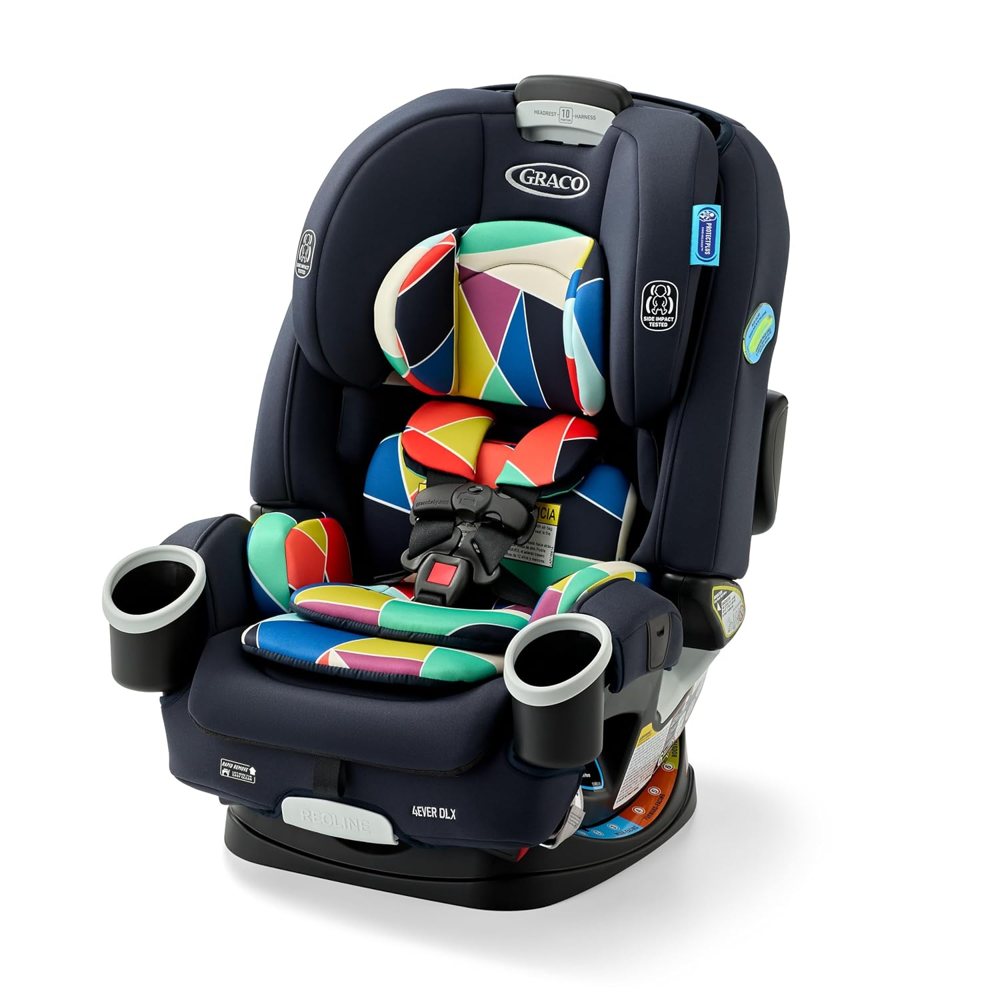
Who it’s forThis is the default recommendation for a family buying one seat to cover birth through booster age. BabyGearLab named it the best convertible for most families, with one of the strongest crash-test analysis scores in its group and easy installation by LATCH or belt. It rear-faces to 40 lb, harnesses forward-facing to 65 lb, then converts to highback and backless booster modes. The RapidRemove cover comes off for washing without uninstalling the seat.
Specifications
Rear-facing
4–40 lb; head at least 1 in below the harness adjuster handle
Forward-facing
26.5–65 lb; up to 49 in
Highback booster
40–100 lb; 43–57 in
Backless booster
40–120 lb; 43–57 in
Seat weight
23 lb
Width
20.3 in
Lifespan
10 years from date of manufacture
Pros
Editors' Choice at BabyGearLab, with top-group crash-test analysis
Easy LATCH and belt installation, with an integrated belt lock-off
Cover removes for washing without uninstalling the seat
Cons
The 10-year expiration can arrive before a child outgrows the backless booster (Car Seats for the Littles)
Wider than the slim seats in this guide
Lower anchors cannot be used in backless booster mode (Car Seats for the Littles)
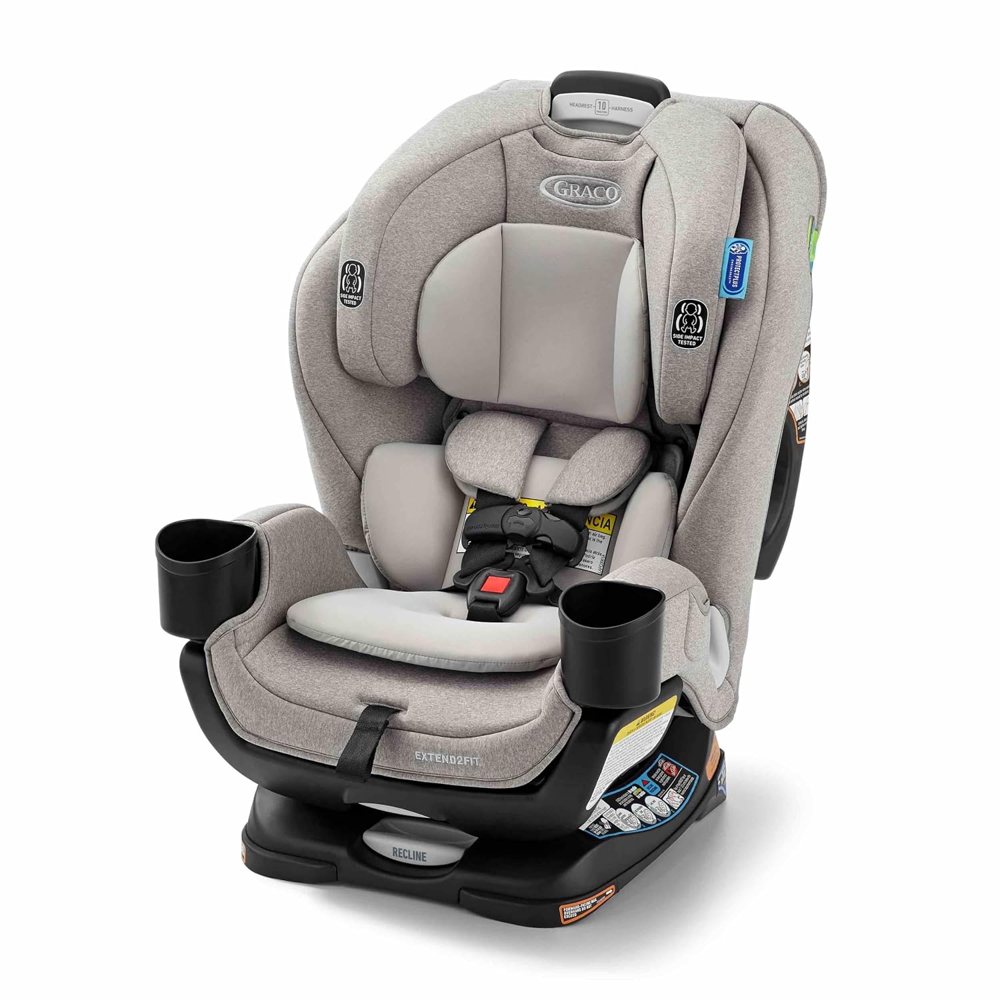
Who it’s forWirecutter has long named the Extend2Fit its overall convertible pick, built around one feature: a 50 lb rear-facing limit and a four-position extension panel that adds up to 5 inches of legroom, so toddlers can stay rear-facing comfortably well past age two. It is a harness-only convertible with no booster mode, and at 19 lb it is one of the lighter seats here. NHTSA rates its rear-facing ease of use at 4 of 5 stars.
Specifications
Rear-facing
4–50 lb; head at least 1 in below the harness adjuster handle
Forward-facing
26.5–65 lb; up to 49 in
Booster
None — harness only
Seat weight
19 lb
Width
19.5 in
NHTSA ease-of-use
4 of 5 stars, rear-facing
Lifespan
10 years from date of manufacture
Pros
Highest rear-facing weight limit in this guide, at 50 lb (Graco)
Extension panel gives older toddlers real rear-facing legroom (Wirecutter, Car Seats for the Littles)
Push-button InRight LATCH anchors connect in about a second (Graco)
Cons
Belt installation takes more work; this model has no built-in lock-off (BabyGearLab)
Harness tightening can catch partway through (BabyGearLab)
The extended panel uses front-to-back space in small back seats (Car Seats for the Littles)
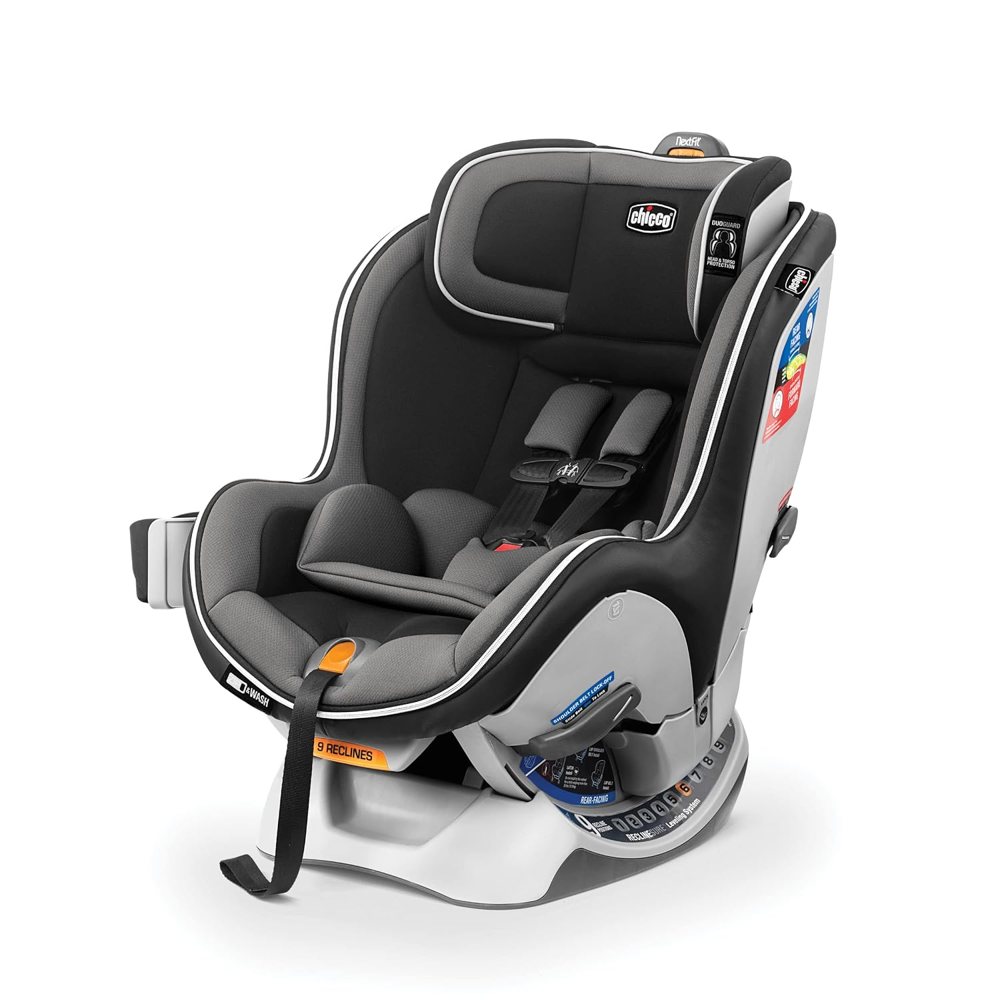
Who it’s forThe NextFit Zip is built around installation help and easy cleaning. The SuperCinch tightener pulls the LATCH strap snug from the center of the seat, bubble level indicators sit on both sides, and the cover zips off in one piece for washing. BabyGearLab scored its crash-test analysis at 8.4 and its ease of use at 8.5, the strongest ease-of-use mark in its comparison group. NHTSA rates it 4 of 5 stars for ease of use in both directions.
Specifications
Rear-facing
5–40 lb; up to 43 in
Forward-facing
22–65 lb; up to 49 in
Booster
None — harness only
Seat weight
25 lb
Width
19 in
NHTSA ease-of-use
4 of 5 stars, rear- and forward-facing
Lifespan
8 years from date of manufacture
Pros
Cover zips off in one piece for machine washing (Chicco)
SuperCinch center pull makes LATCH installations tight (Consumer Reports)
Strong crash-test analysis and ease-of-use scores (BabyGearLab)
Cons
Heavy at 25 lb for moving between cars (Consumer Reports)
Installation scores trail the Graco seats in BabyGearLab testing
Shorter 8-year lifespan than the 10-year seats here
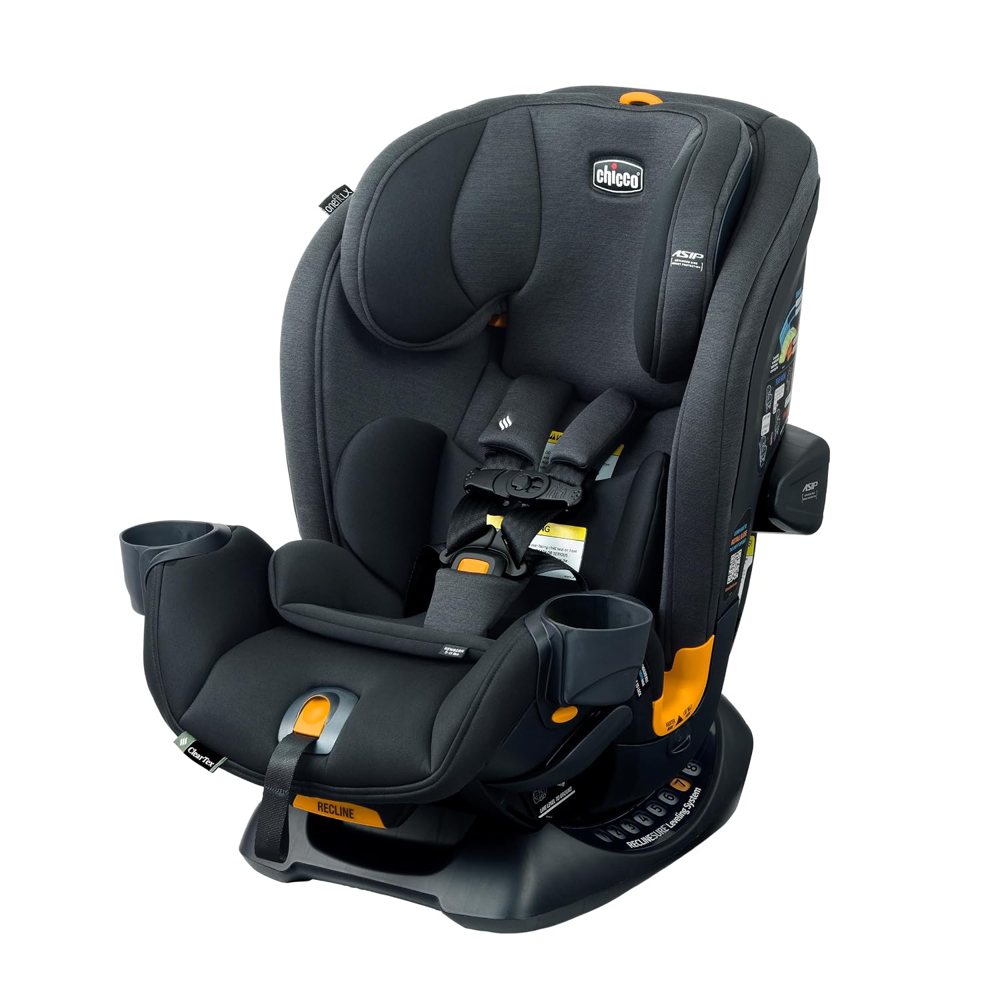
Who it’s forThe OneFit covers rear-facing, forward-facing and highback booster stages in a 19-inch frame. Car Seats for the Littles found that it genuinely fits children from newborn to upper elementary age, including a proper booster belt fit for older kids, which many all-in-one seats fail to deliver. The headrest adjusts through ten positions with a no-rethread harness, and the ClearTex fabrics are made without added flame-retardant chemicals.
Specifications
Rear-facing
5–40 lb; up to 43 in
Forward-facing
25–65 lb; up to 54 in
Booster
40–100 lb; up to 57 in
Seat weight
25 lb
Width
19 in
Lifespan
10 years from date of manufacture
Pros
Fits newborns and booster-age children well in a single seat (Car Seats for the Littles)
Belt lock-offs and SuperCinch LATCH simplify installation (Car Seats for the Littles)
ClearTex fabrics use no added flame-retardant chemicals (Chicco)
Cons
Heavy, and long when installed rear-facing; tall front passengers lose legroom (BabyGearLab)
Two-position chest clip takes practice to set correctly (Car Seats for the Littles)
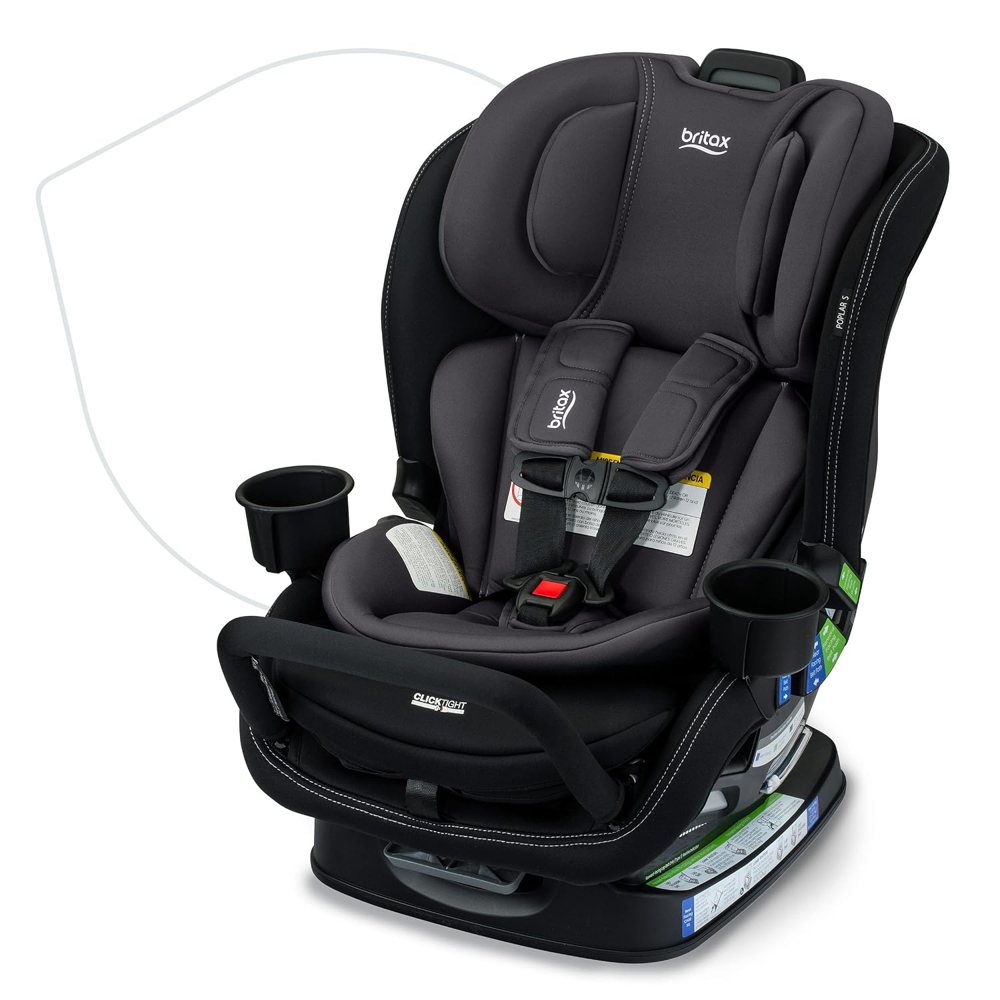
Who it’s forThe Poplar S is 17 inches wide and rear-faces to 50 lb, a rare pairing of a slim shell and a high rear-facing limit. The ClickTight panel opens, routes the vehicle belt through the seat, and clamps down to tension it; BabyGearLab scored its belt installation 9 of 10. The S version adds an anti-rebound bar and infant inserts to the base Poplar. NHTSA has not published an ease-of-use rating for this newer model.
Specifications
Rear-facing
5–50 lb; up to 49 in
Forward-facing
22–65 lb; up to 49 in
Booster
None — harness only
Seat weight
28 lb
Width
17 in
NHTSA ease-of-use
Not rated
Pros
17 in width leaves room for three-across setups (Britax)
ClickTight belt installation scored 9 of 10 (BabyGearLab)
50 lb rear-facing limit matches the Extend2Fit
Cons
28 lb is heavy for a slim seat
Crash-test analysis was average for its price in BabyGearLab testing
Outer cover is difficult to refit after washing (The Car Seat Pros)
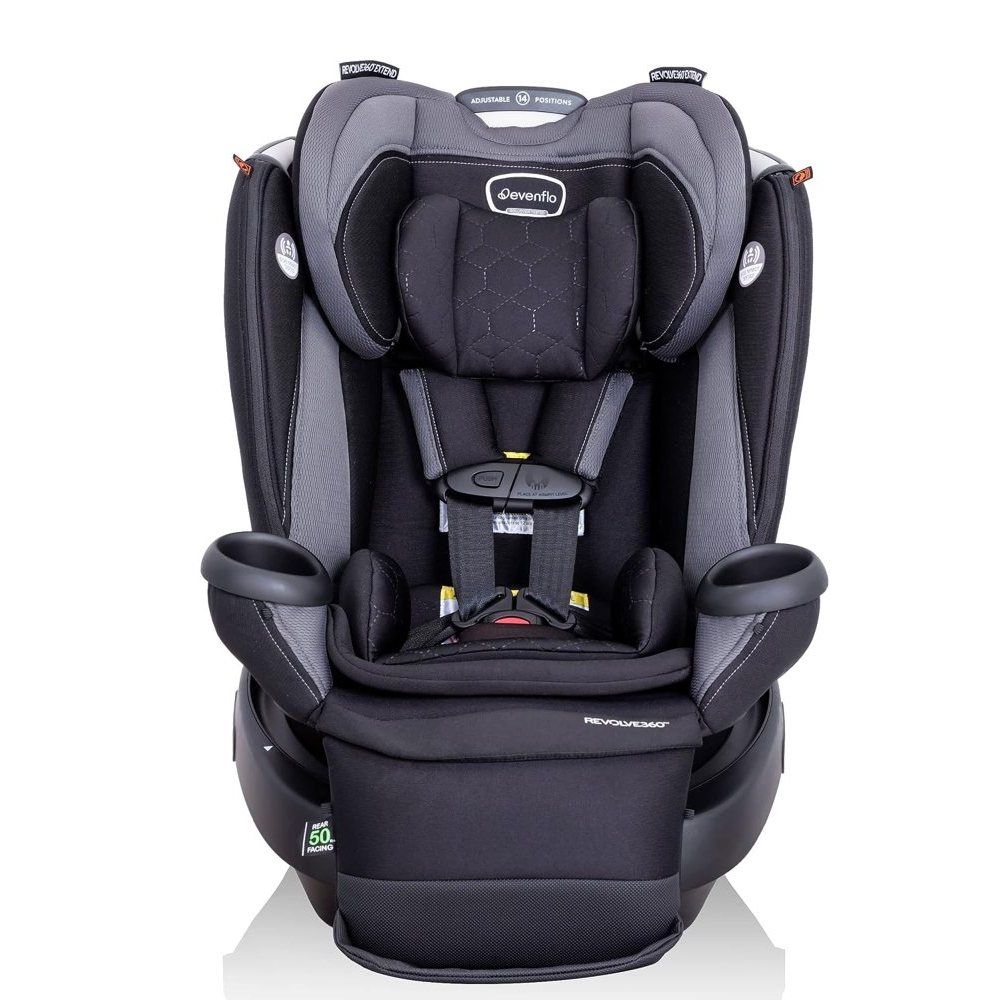
Who it’s forThe Revolve360 Extend rotates a full turn on its base, so a child can be loaded facing the open door and then turned to rear- or forward-facing. The base installs once and stays in place across both harness modes, and the seat converts to a highback booster rated to 120 lb. One disclosure belongs in plain view: NHTSA opened an investigation in January 2024 into reports of the seat shell separating from the base on the Revolve360 line. An investigation is a fact-finding step. It is not a recall, and this model passed both recall checks run for this guide.
Specifications
Rear-facing
4–50 lb; 17–48 in
Forward-facing
22–65 lb; up to 49 in
Booster
40–120 lb; 44–57 in
Seat weight
29.6 lb
Width
19.8 in
NHTSA ease-of-use
Not rated
Pros
Rotation makes loading a heavy toddler easier on the caregiver's back (The Bump)
One base installation covers rear- and forward-facing harness use (Evenflo)
Booster mode extends the seat's working life to 120 lb
Cons
Widest and heaviest seat in this guide
The seat must sit fully reclined before it rotates into forward-facing (The Bump)
The shell-release key is a separate piece that can go missing (The Bump)
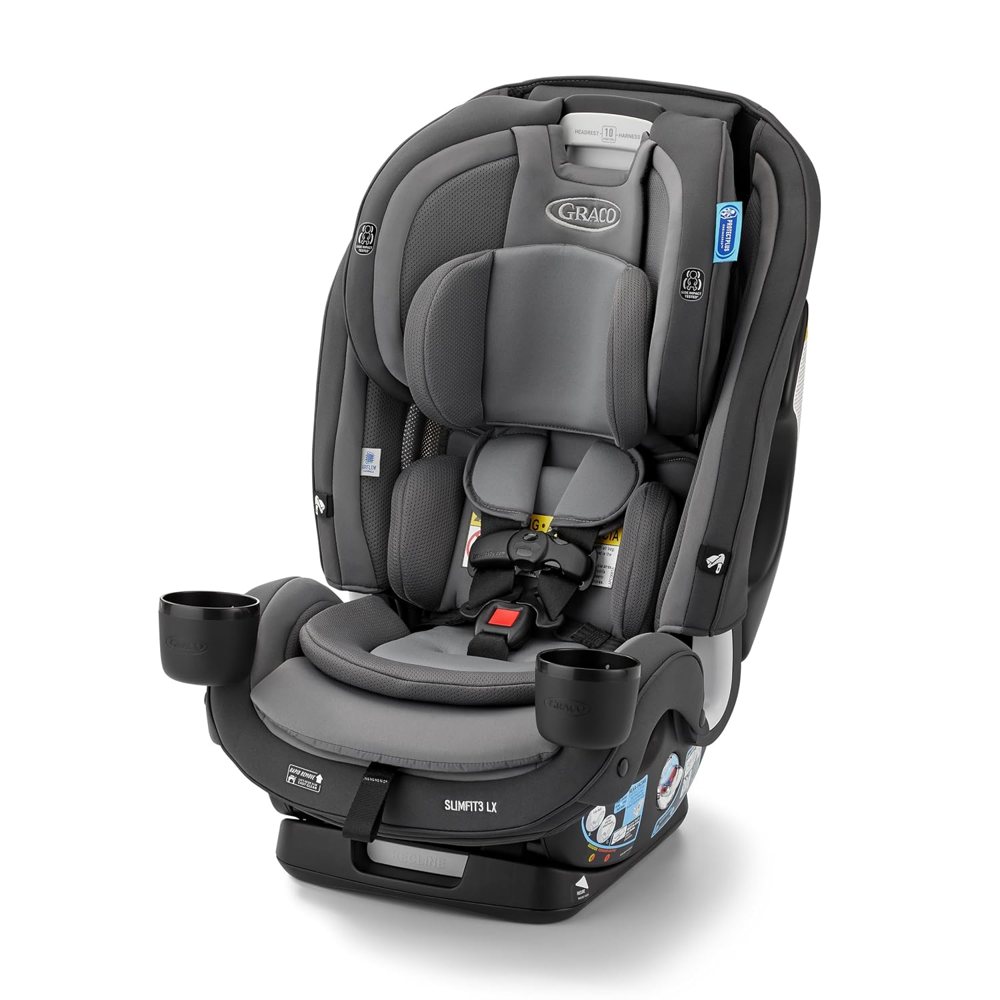
Who it’s forAt 16.7 inches wide, the SlimFit3 LX is the narrowest seat in this guide. BabyGearLab named it the best narrow convertible seat in its testing, and Car Seats for the Littles installed three of them in a row in two test vehicles. It covers rear-facing, forward-facing and highback booster stages, and the cover attaches with snaps for fast removal. The same seat is sold at Walmart as the True3Fit LX.
Specifications
Rear-facing
5–40 lb; up to 49 in, head at least 1 in below the adjuster handle
Forward-facing
26.5–65 lb; up to 49 in
Booster
40–100 lb; 43–57 in
Seat weight
19.2 lb
Width
16.7 in
NHTSA ease-of-use
Not rated
Lifespan
10 years from date of manufacture
Pros
Narrowest footprint here; three fit across in Car Seats for the Littles testing
Snap-on cover is quick to remove and refit (BabyGearLab)
Above-average crash-test analysis in BabyGearLab testing
Cons
Harder to install in every mode than the wider seats (BabyGearLab)
Harness tightening runs uneven, and the buckle is stiff (BabyGearLab)
Buckling a booster rider seated next to another seat is awkward (Car Seats for the Littles)
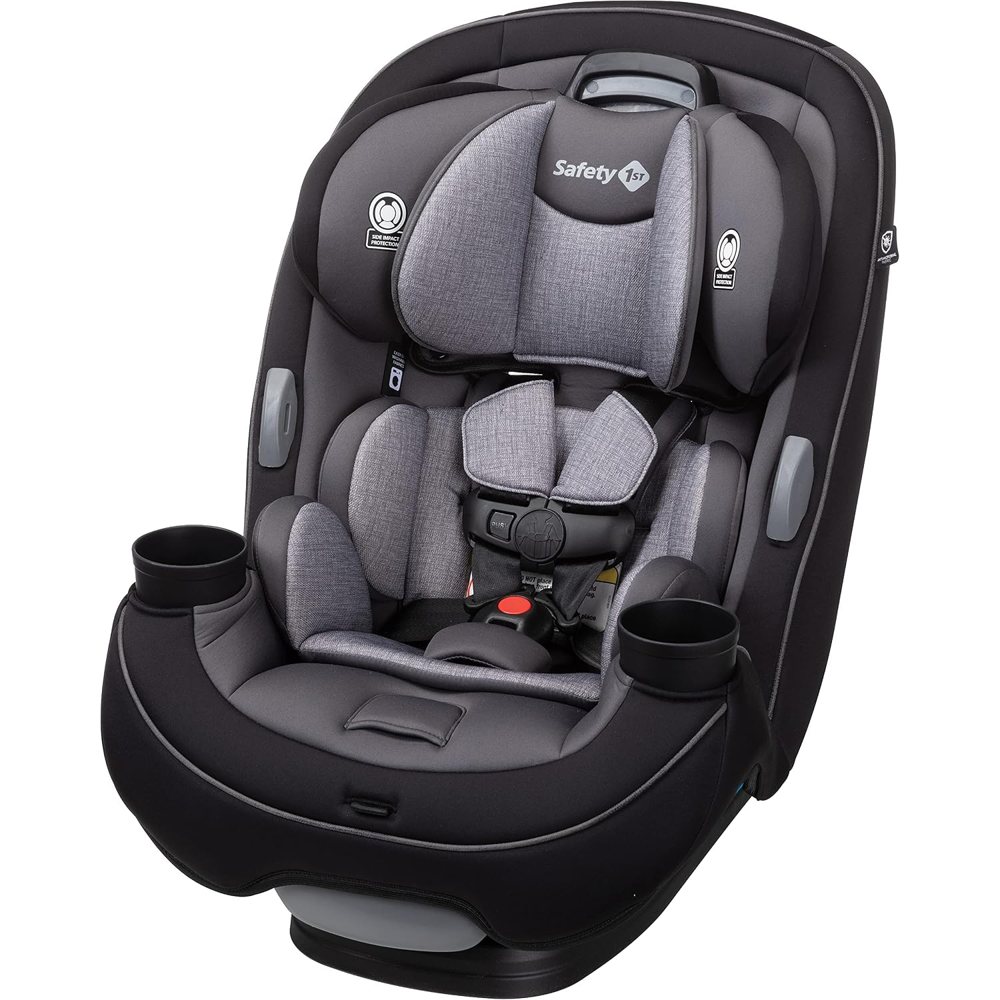
Who it’s forThe Grow and Go is the lowest-priced all-in-one in this guide, covering 5 to 100 lb across rear-facing, forward-facing and booster stages. The QuickFit harness and headrest adjust together, the pad goes in the washer and dryer, and both cup holders go in the dishwasher. Two cautions belong with the low price. NHTSA gives this seat 2 of 5 stars for rear-facing ease of use, so budget extra time for the first installation and work through the manual. And Dorel recalled a different sub-model, the Grow and Go Sprint (model numbers starting CC321), in 2025; the base Grow and Go reviewed here is a different model and was not part of that recall.
Specifications
Rear-facing
5–40 lb; 19–40 in
Forward-facing
22–65 lb; 29–49 in
Booster
40–100 lb; 43–52 in
Seat weight
18.3 lb
Width
19.25 in
NHTSA ease-of-use
2 of 5 stars rear-facing; 4 of 5 forward-facing; 3 of 5 booster
Pros
Lowest list price in this guide (Safety 1st)
QuickFit harness and headrest adjust in one motion, with no rethreading
Washer- and dryer-safe pad; dishwasher-safe cup holders
Cons
Below-average crash-test analysis and low installation scores (BabyGearLab)
2-star NHTSA rear-facing ease-of-use rating
Booster belt fit draws mixed notes in expert reviews (Car Seats for the Littles)
Every car seat carries an expiration date, printed on a label on the seat shell or stamped into the plastic, counted from the date of manufacture. Lifespans among the seats in this guide run from 8 years for the NextFit Zip to 10 years for the Graco, OneFit and Grow and Go seats. Plastic weakens with age and heat cycles, replacement parts and manuals go out of print, and safety standards move on. A seat past its date should be retired, even when it looks fine.
Used seats carry a second set of risks. A seat's crash history is invisible. A crash can stress the shell and harness without leaving marks, and manufacturers direct owners to replace seats after moderate and severe crashes. Labels, manuals, and parts such as infant inserts and harness pads go missing. Recall status follows the model number and manufacture date, and an unregistered used seat leaves its new owner out of recall notices.
If you accept a used seat, get it from someone whose account of its history you trust. Confirm the expiration date on the label, check the model number against CPSC and NHTSA recall records, and confirm that every part listed in the manual is present. When any of those checks fails, a new seat is the safer purchase.
Three checks before you buy
The right seat is the one that fits your child, your car, and your routine. Three checks settle most of it.
Measure the back seat
Widths in this guide run from 16.7 to 20.3 inches. Measure the seating position and leave room for the buckle stalks on both sides. A three-across plan needs one of the narrow seats and a test installation before the return window closes.
Check rear-facing space
Tall shells and legroom panels take front-to-back room. In a compact sedan, install the seat rear-facing and confirm the front seats still adjust to a safe driving position.
Register the seat
Mail the registration card or register online with the model number and manufacture date. Registration is how the manufacturer reaches you if a recall is announced later.
Specifications are based on published manufacturer and retailer information for the listed models. Check the current product listing and the seat's manual for full installation instructions before use.